

Fellowship Level Program in Critical Care Medicine
Get in-depth knowledge of cardiac emergencies, poisoning, life-threatening emergencies, trauma, and more!
Course Outcomes:

About the course:
Curriculum:
Module 1: Management of Trauma
1
ATLS
2
Shock and Resuscitation
3
Chest Trauma
4
Basic Principles of ECG
5
Musculoskeletal Trauma
6
Head Trauma
7
Management of Heart Failure
8
Trauma in Special Populations
9
Trauma Resuscitation in Pregnancy
10
Trauma Anaesthesia and Critical Care
11
Tachyarrhythmias
12
Trauma Triage and Transfer Criteria
Module 2: Infections in Critical Care
1
Antimicrobial Stewardship
2
Prevention and Control of Nosocomial Pneumonia
3
Antimicrobial therapy
4
Septic Shock
Module 3: Acid- Base Abnormalities & Electrolyte Abnormalities
1
Acid-Base Analysis
2
Metabolic Acidosis
3
Metabolic Alkalosis
4
Respiratory Acidosis
5
Respiratory Alkalosis
6
Osmotic Disorders
7
Potassium
8
Magnesium
9
Calcium and Phosphorus
10
Sodium
Module 4: Allergy and Poisoning
1
Allergic Reactions
2
Anaphylaxis Management
3
Drug Allergies
4
Introduction to Poisoning
5
Gastrointestinal Decontamination
6
Toxic Alcohols and Antidotes
7
Opioid Poisoning
8
Carbon Monoxide Poisoning
9
Drug Overdose and Toxicities
10
Pesticide and Herbicide Poisoning
11
Heavy Metal Poisoning
12
Snake and Insect Bites Poisoning
13
Household and Industrial Chemical Exposure
14
Plant and Mushroom Poisoning
15
Toxicology Monitoring and Laboratories
Module 5: Preventive Practices in Critical Care
1
Occupational Exposures
2
Alimentary Prophylaxis
3
Venous Thromboembolism
4
Infection Prevention and Control
5
Pressure Ulcer Prevention
6
Ventilator-Associated Pneumonia (VAP) Prevention
7
Central Line-Associated Bloodstream Infection (CLABSI) Prevention
8
Catheter-Associated Urinary Tract Infection (CAUTI) Prevention
9
Delirium Prevention
10
Fall Prevention
11
Medication Safety
12
Sedation and Delirium Management Protocols
13
Early Mobilization and Rehabilitation
Module 6: Ethical Considerations in Critical Care
1
Conversations With Families of Critically Ill Patients
2
Basic Ethical Principles in Critical Care
3
Advanced Care Planning and Advance Directives
4
Withholding and Withdrawing Life-Sustaining Treatment
5
Palliative Care in the Intensive Care Unit
6
Quality of Life and Patient-Centered Decision-Making
7
Brain Death
8
Organ Donation and Transplantation
Who this course is for:
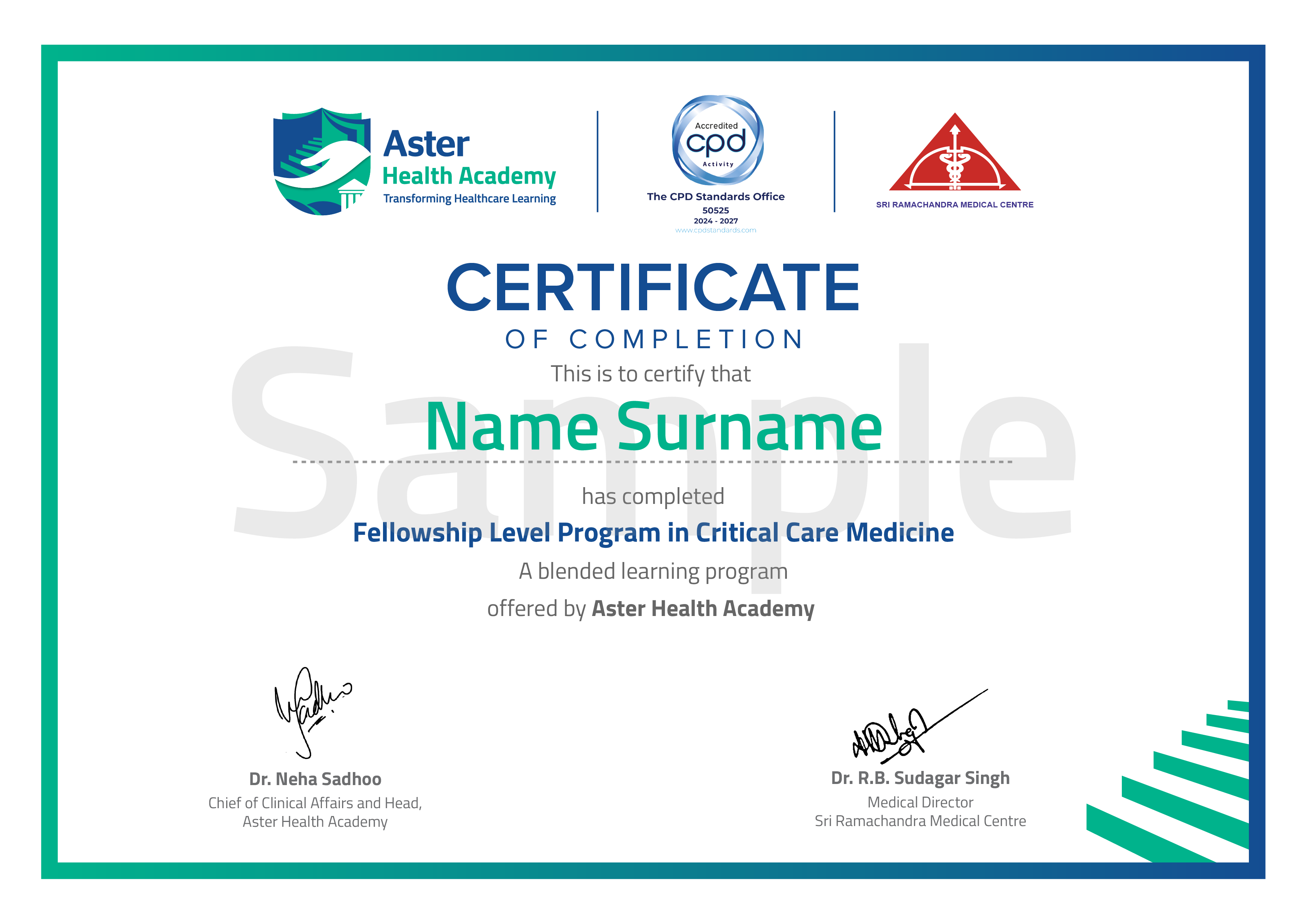
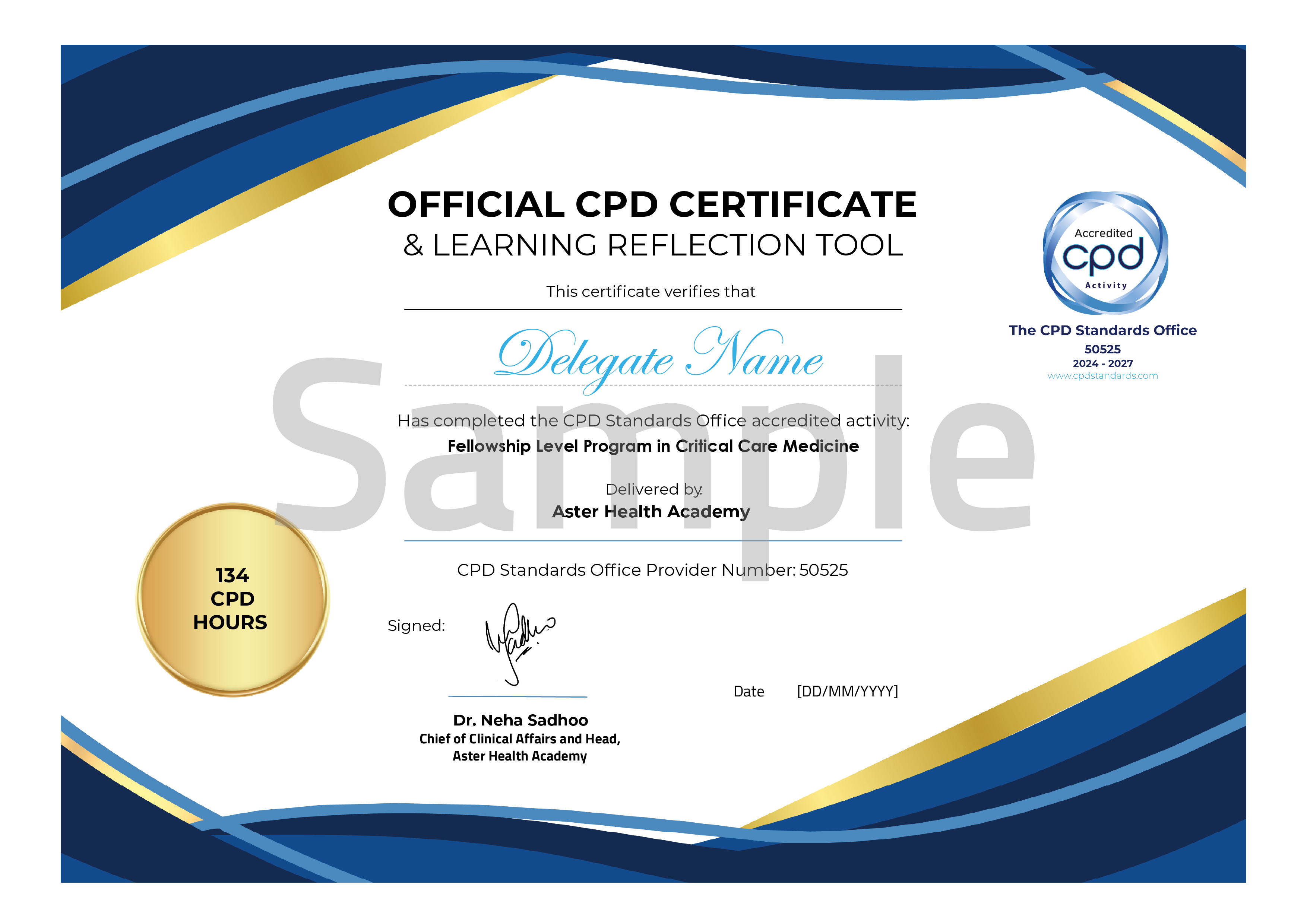
Sample Certificate:
FAQ:
+ GST as applicable
Academic Team

Dr. Manjunath T
Consultant - Critical Care Medicine, Manipal hospitals, Bengaluru

Dr. Niranjan Panigrahi
Lead Consultant ECMO & Critical Care Services, Apollo Hospital Jubilee Hills, Hyderabad

Dr. Aklesh Tankdekar
Head Consultant Critical Care, Wockhardt Hospitals Ltd, Mumbai

Dr. Subramanyam Mahankali
Lead Consultant & Senior Anaesthesiologist, Aster RV Hospital, Bangalore

Dr. Pooja Wadwa
Consultant Intensivist, Fortis Hospital, Gurgaon

Dr. Viral Parekh
Consultant Anaesthesiologist, P. D. Hinduja Hospital & Medical Research Centre, Khar, Mumbai
Curriculum:
Module 1: Management of Trauma
1
ATLS
2
Shock and Resuscitation
3
Chest Trauma
4
Basic Principles of ECG
5
Musculoskeletal Trauma
6
Head Trauma
7
Management of Heart Failure
8
Trauma in Special Populations
9
Trauma Resuscitation in Pregnancy
10
Trauma Anaesthesia and Critical Care
11
Tachyarrhythmias
12
Trauma Triage and Transfer Criteria
Module 2: Infections in Critical Care
1
Antimicrobial Stewardship
2
Prevention and Control of Nosocomial Pneumonia
3
Antimicrobial therapy
4
Septic Shock
Module 3: Acid- Base Abnormalities & Electrolyte Abnormalities
1
Acid-Base Analysis
2
Metabolic Acidosis
3
Metabolic Alkalosis
4
Respiratory Acidosis
5
Respiratory Alkalosis
6
Osmotic Disorders
7
Potassium
8
Magnesium
9
Calcium and Phosphorus
10
Sodium
Module 4: Allergy and Poisoning
1
Allergic Reactions
2
Anaphylaxis Management
3
Drug Allergies
4
Introduction to Poisoning
5
Gastrointestinal Decontamination
6
Toxic Alcohols and Antidotes
7
Opioid Poisoning
8
Carbon Monoxide Poisoning
9
Drug Overdose and Toxicities
10
Pesticide and Herbicide Poisoning
11
Heavy Metal Poisoning
12
Snake and Insect Bites Poisoning
13
Household and Industrial Chemical Exposure
14
Plant and Mushroom Poisoning
15
Toxicology Monitoring and Laboratories
Module 5: Preventive Practices in Critical Care
1
Occupational Exposures
2
Alimentary Prophylaxis
3
Venous Thromboembolism
4
Infection Prevention and Control
5
Pressure Ulcer Prevention
6
Ventilator-Associated Pneumonia (VAP) Prevention
7
Central Line-Associated Bloodstream Infection (CLABSI) Prevention
8
Catheter-Associated Urinary Tract Infection (CAUTI) Prevention
9
Delirium Prevention
10
Fall Prevention
11
Medication Safety
12
Sedation and Delirium Management Protocols
13
Early Mobilization and Rehabilitation
Module 6: Ethical Considerations in Critical Care
1
Conversations With Families of Critically Ill Patients
2
Basic Ethical Principles in Critical Care
3
Advanced Care Planning and Advance Directives
4
Withholding and Withdrawing Life-Sustaining Treatment
5
Palliative Care in the Intensive Care Unit
6
Quality of Life and Patient-Centered Decision-Making
7
Brain Death
8
Organ Donation and Transplantation
FAQ:
Duration: 15 Months
Level: advanced
Batch Start Date
Jan, 2026Enquiry Form
Includes
Full lifetime access
Access on mobile and TV
Fellowship Level Program in Critical Care Medicine
Price:
INR 180,000
